- Pets
- Health
Shockwave Therapy for Dogs: How Sound Waves Help Pets Heal and Move Better
November 2, 2026
By Kim Christie, DVM, CCRT, DACVSMR
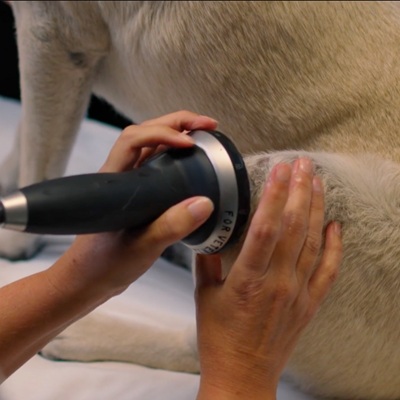
If your dog has been limping, slowing down on walks, or recovering from surgery, you may have heard the words “shockwave therapy.” It sounds intense, but it is one of the gentlest and most effective tools we have in veterinary sports medicine and rehabilitation. At Veterinary Specialty Center (VSC), we are proud to be the only veterinary facility on the Suncoast offering this advanced treatment.
Here is what shockwave therapy is, how it works, and which conditions it can help.
What Is Shockwave Therapy?
Extracorporeal shockwave therapy, often shortened to ESWT, uses focused pulses of acoustic (sound) energy to stimulate healing in tissues deep beneath the skin. “Extracorporeal” simply means the energy is generated outside the body. There are no incisions, no needles, and no medications involved in the treatment itself.
Despite the name, shockwave therapy has nothing to do with electricity. The “shock” refers to the rapid pressure wave created by the device, much like the sound wave you feel from a drum. This wave travels through the skin and soft tissue and is concentrated on the injured area.
How Does It Help My Dog Heal?
When shockwave energy reaches injured tissue, it sets off a series of natural healing responses:
- Pain relief. Shockwave therapy calms overactive pain nerves, so many dogs feel more comfortable soon after treatment.
- Better blood flow. It encourages the growth of new small blood vessels, bringing oxygen and nutrients to tissue that heals slowly.
- Reduced inflammation. It helps quiet chronic inflammation that keeps an injury from resolving.
- Tissue regeneration. It stimulates the cells that repair tendons, ligaments, and bone, and helps break down scar tissue and calcium deposits.
In short, shockwave therapy “restarts” the healing process in areas that have become stuck, which is why it is especially valuable for chronic injuries that have not responded well to rest and medication alone.
Conditions Shockwave Therapy Can Help
Shockwave therapy is used for a wide range of orthopedic and soft tissue problems in dogs. It is most often recommended for the following.
- Osteoarthritis: Arthritis is the most common reason we use shockwave therapy. Dogs with arthritis in the hips, elbows, knees (stifles), shoulders, or wrists often show less pain and better use of the affected leg after a course of treatment. For senior dogs and dogs that cannot tolerate long-term anti-inflammatory medications, shockwave therapy can be an important part of a multimodal pain management plan.
- Tendon and Ligament Injuries: Tendons and ligaments have a limited blood supply, so they are notoriously slow to heal. Shockwave therapy is one of the best-studied options for these injuries, including:
- Shoulder tendinopathies, such as supraspinatus tendinopathy and biceps tenosynovitis, common in active and sporting dogs
- Iliopsoas strains, a frequent hip-flexor injury in agility and working dogs
- Achilles (common calcaneal) tendon injuries
- Partial ligament injuries and chronic sprains
- Recovery After Orthopedic Surgery: Shockwave therapy can speed recovery after procedures such as TPLO surgery for a torn cranial cruciate ligament (the canine ACL). Research has shown that dogs treated with shockwave after TPLO return to bearing weight on the leg faster. It can also be used to support healing after fracture repair and other joint surgeries.
- Slow-Healing and Non-Union Fractures: When a broken bone is slow to knit together (a delayed union) or stops healing altogether (a non-union), shockwave therapy can stimulate bone-forming cells and new blood vessel growth to help the fracture heal.
- Hip and Elbow Dysplasia: Young and adult dogs with hip or elbow dysplasia often develop joint pain and early arthritis. Shockwave therapy can reduce discomfort and support mobility, either on its own or alongside surgery and rehabilitation exercises.
- Back and Neck Pain: Dogs with spinal arthritis (spondylosis), lumbosacral disease, or chronic muscle pain along the back can benefit from shockwave therapy to relieve pain and improve comfort.
- Muscle Injuries and Scar Tissue: Chronic muscle strains, trigger points, and fibrotic (scarred) muscle can limit a dog’s range of motion. Shockwave therapy helps soften scar tissue and restore normal muscle function.
- Wounds and Lick Granulomas: Shockwave therapy is not only for bones and joints. It can help stubborn, slow-healing wounds close faster, and it is a useful option for acral lick granulomas, the chronic sores some dogs create by repeatedly licking a leg.
Part of a Complete Rehabilitation Plan
Shockwave therapy works best as one part of a comprehensive plan. At VSC, our board-certified surgeons and certified rehabilitation team combine shockwave therapy with therapeutic exercise, other rehabilitation therapies, weight management, and medications when needed. Every plan is tailored to your dog’s diagnosis, age, and lifestyle, whether the goal is getting back to agility competition or simply enjoying an easy walk around the neighborhood.
Before starting treatment, we perform a thorough orthopedic and neurologic examination and, when appropriate, advanced diagnostic imaging to confirm exactly what is causing your dog’s pain. An accurate diagnosis lets us target the shockwave energy where it will do the most good.
Is Shockwave Therapy Right for Your Dog?
If your dog is living with arthritis, recovering from surgery, or struggling with a tendon, ligament, or muscle injury that just won’t heal, shockwave therapy may help them feel and move better. Talk with your family veterinarian about a referral, or contact us directly.
Why Choose VSC?
VSC is the only veterinary facility on the Suncoast offering shockwave therapy. Our team pairs this advanced technology with board-certified surgical expertise and a dedicated sports medicine and rehabilitation program, all under one roof in Sarasota. That means your dog can be diagnosed, treated, and rehabilitated by a team that communicates closely at every step.
Schedule a consultation with our sports medicine and rehabilitation team to find out whether shockwave therapy is a good fit for your dog.